
thinkSPAIN Logo
  • Buy

    Property for Sale

    • See all properties for sale
    • Start your search using our filters
    • Use our map search
    • Draw your search area
    • Where? Use our location filters

    Popular real estate searches

    Apartments/Flats Fincas/Country Houses Townhouses Villas
    Garden Lift Luxury New Build Parking/Garage Pool Sea View Terrace/Balcony
    Alicante Almería Barcelona Benahavís Calvià Cartagena Costa Blanca Costa del Sol Dénia Estepona Girona Gran Canaria Ibiza Javea / Xàbia Madrid Mallorca Marbella Mazarrón Mijas Murcia Málaga Orihuela Palma de Mallorca Tenerife Torrevieja Valencia
    Browse all locations and property types
  • Rent

    Property for Rent

    • See all properties for rent
    • Holiday rentals
    • Start your search using our filters
    • Use our map search
    • Draw your search area

    Popular rental searches

    Apartments/Flats Fincas/Country Houses Townhouses Villas
    Garden Lift Mountain Views New Build Parking/Garage Pool Sea View Terrace/Balcony
    Alicante Almería Almuñécar Altea Barcelona Calvià Cartagena Costa Blanca Costa del Sol Dénia Estepona Gran Canaria Granada Ibiza Madrid Mallorca Marbella Murcia Málaga Orihuela Palma de Mallorca Tenerife Torre-Pacheco Torrevieja Torrox Valencia
    Browse all locations and property types
  • Sell

    I want to advertise on thinkSPAIN

    • I'm an estate agent & want to list my properties
    • I'm an owner and I want to advertise my property directly

    I'm looking for an estate agent in:

    Alicante Almería Barcelona Castellón Cádiz Girona Granada Málaga Tarragona Valencia
    See all estate agents
  • Where?

    Where to buy/rent?

    • Search by lifestyle needs (Location filters)
    • Browse locations by features/services
    • Use our map search
    • Draw your search area

    Popular location searches

    Alicante Almería Barcelona Castellón Cádiz Girona Gran Canaria Granada Ibiza Madrid Mallorca Murcia Málaga Tarragona Tenerife Valencia
  • Map / Draw Your Area

    Use our interactive map to find properties

    • Map search
    • Draw your search area

    Popular map searches

    Alicante Almería Barcelona Benahavís Calvià Cartagena Costa Blanca Costa del Sol Dénia Estepona Girona Gran Canaria Ibiza Javea / Xàbia Madrid Mallorca Marbella Mazarrón Mijas Murcia Málaga Orihuela Palma de Mallorca Tenerife Torrevieja Valencia
  • How can we help you?

    • Articles & Guides
    • Business & Services Directory
    • Jobs in Spain
    • Advertiser Login
    • Advertising with thinkSPAIN

    Popular searches

    Lawyers / Solicitors Mortgage Brokers Estate Agents Property Maintenance / Management Currency Brokers Surveyors Architects / Architectural Design Tax Consultants
    Finance, Legal & Taxes Buying in Spain Living in Spain Moving to Spain Finding the right property News Areas in Spain Spanish Lifestyle & Culture Property Market Working in Spain Top Locations & Properties Real Estate Market

By Signing up you are agreeing with our Terms and Privacy Policy.

Looking for the Professionals/Advertiser Login?
or

Don't have an account?  

Sign up

By Signing up you are agreeing with our Terms and Privacy Policy.
or

Already have a thinkSPAIN account?

Sign in/Register

Looking for the Professionals/Advertiser Login?

By Signing up you are agreeing with our Terms and Privacy Policy.
or

Don't have an account?

Forgot your password?

Feedback is welcome

By submitting this form, you confirm that you agree to our Terms of Use and Privacy Policy.
thinkSPAIN Logo

Catalunya's 'Covid haven' featured in The New York Times


Catalunya's 'Covid haven' featured in The New York Times

ThinkSPAIN Team 21/03/2021

AN 'EXAMPLE' of anti-Covid management that has made it to the cover of The New York Times, but not through confining its inhabitants or any other restrictions – a municipality in Catalunya has suddenly leapt onto the global media stage.

A panoramic view over Gósol, Lleida province (photo: Wikimedia Commons)

But how did Gósol do it?

And how did this Lleida-province village manage to save itself from extinction at the same time?

By asking people to go and live there.


'Empty Spain'

If you've explored the country beyond its high-profile resort areas, you'll know Spain isn't just coast, swimming pools, palm trees and whitewashed villas. It's not even just about huge, attractive cities with classical architecture, pastel-coloured mansions and cast-iron balconies, museums, art galleries, restaurants and nightlife. 

Gósol's town hall square, featured on the cover of The New York Times

Of course, it has all that, too, but massive chunks of Spain are completely rural – in fact, it's the second-most mountainous country in Europe after Switzerland, which effectively makes it the most hilly nation in the EU. It's also very green, in parts, with regions compared favourably to Ireland and Scotland, and its scenery – vastly different from province to province and even within the same provinces – is dramatic, superlative, overpoweringly-beautiful; you'll never get bored with it however long you spend gazing at it from your window.

But the downside of all this rural Eden is a crippling population decline. Not in Spain as a country – only in its inland countryside parts, where villages can be over 20 kilometres apart, the nearest decent-sized town with a decent-sized supermarket over an hour's drive away, and commuting impossible unless you want to spend most of your wages on fuel and more of your time driving to and from than actually at the office.

'Empty Spain', therefore, suffers from being impractical for the working age, who are also the childbearing age, meaning there's little call for schools, and low demand for internet and phone connections; indeed, those few left behind, mostly retired, are not enough of a customer base to make it worthwhile for operators to set up networks.

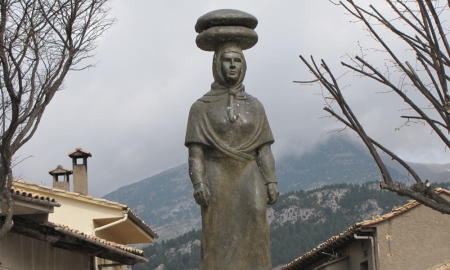
A Picasso sculpture in Gósol (photo: Camping Pedraforca)

Which means that anyone who might have thought about moving in is already faced with barriers: Poor communications for home-working, no schools for the children...

...and the beat goes on. 

So does the shrinking headcount, as the retired communities get older, the non-retired move away, and with each generation, they just get smaller.

It's a huge challenge for Spain's authorities, and one that rural populations have been pushing for solutions for over decades. Tourism helps – ski resorts, hill-walking, the raw, time-forgotten experience of village life that has barely changed in centuries are all a hook, but for tourism, you also need decent services, road links and transport.

Government schemes include subsidised telecommunications, technology hubs to encourage home-working, and 'community' schools that serve several villages; even the post office, Correos, with its cashpoint roll-out and new deal with Banco Santander to allow its customers to use their local mail centre as a bank in villages with no branch of any entity are all heading in the right direction, but 'Empty Spain' just needs more of the same and as quickly as it can get it.

Gósol, in the rural Berguedà district in Catalunya's only land-locked province, had another trick up its sleeve.


Refuge from the pandemic – or at any other time

Keeping safe in times of mass contagion is, clearly, harder in big cities – there are just too many people and not enough air-space between them. Getting from one end to the other involves public transport. It's hard to avoid other humans.

Which is where a remote rural village, desperate for more residents, could be the solution – social distancing is easy enough. You can put 200 metres between you and the next member of your species, never mind two. 

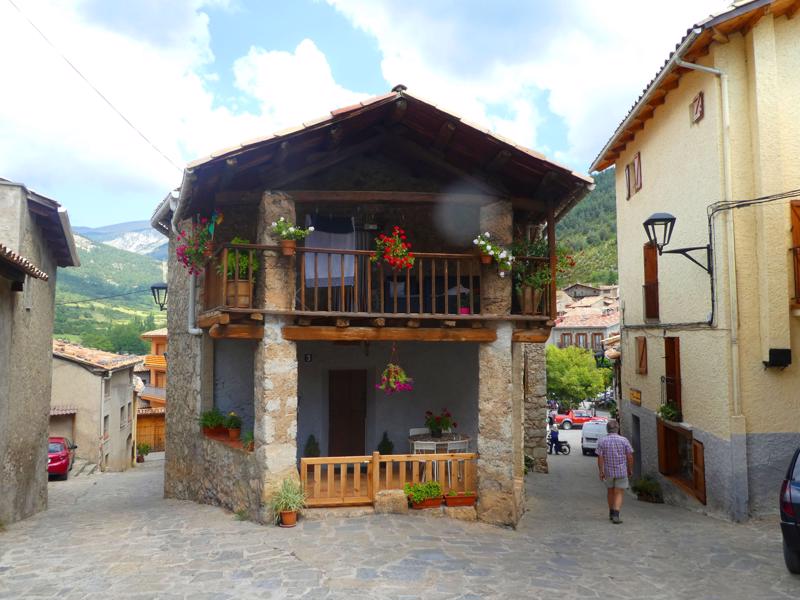
Ca L'Antonet is a fairly typical example of a house in Gósol (photo: Pinterest)

Gósol's exodus was becoming critical. By the year 2015, only 120 permanent residents remained there, and by 2020, the local school was on the point of closing down. And yet, at the time when one of Spain's most acclaimed artists, Pablo Picasso, settled there for a spell in 1906 – using it as a base for his work and the place where many of his creations from his so-called 'pink era' came about – Gósol was home to 745 people.

Even with holiday-home owners, Gósol's headcount rarely topped 140 at any time of the year, but with the explosion of Covid, it proved to be the perfect great escape.

Urging Spain's urban-dwellers to 'seek refuge' from the virus, Gósol has so far managed to bring itself back from the brink: So far, 30 people have moved in, according to the local census, and the doomed village school now has 16 pupils.


What else is great about Gósol?

Clean air, beautiful countryside, a stone's throw from the ski resorts of the province of Lleida, a close-knit community where nobody stays a tourist for long, practically no traffic – these alone make Gósol a bit of a rural magnet, although it does share several of these features with literally thousands of small villages across Spain. But 115 years before The New York Times put it on the map, another international name did so, too: Pablo Picasso, who spent his days in Gósol's only tavern, the Cal Tampanada, then owned by Josep Fontdevila, and developed a completely new style that involved a large amount of pink and more pictorial representations of his subjects.

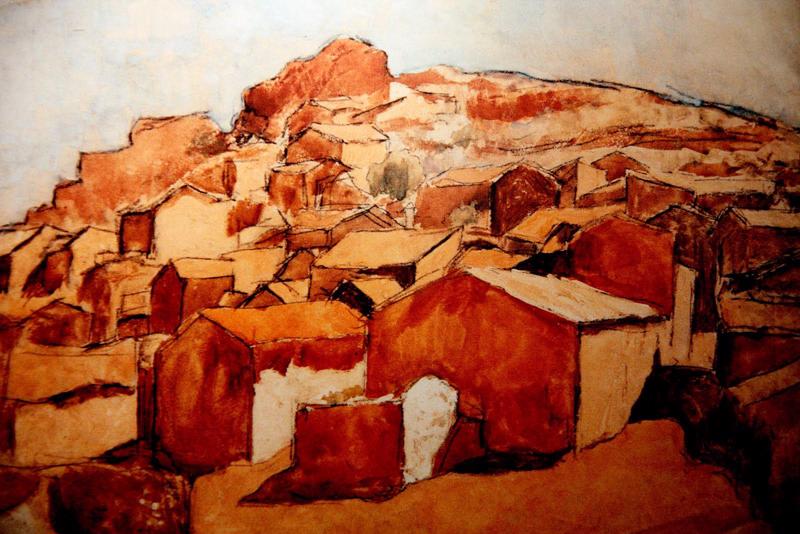
One of Pablo Picasso's many paintings of Gósol during his time there at the beginning of the 20th century, an era that saw his style change dramatically

One of these subjects was Fernande Olivier, his muse and then girlfriend, and others included the villagers themselves, the local scenery, the bulls and the horses.

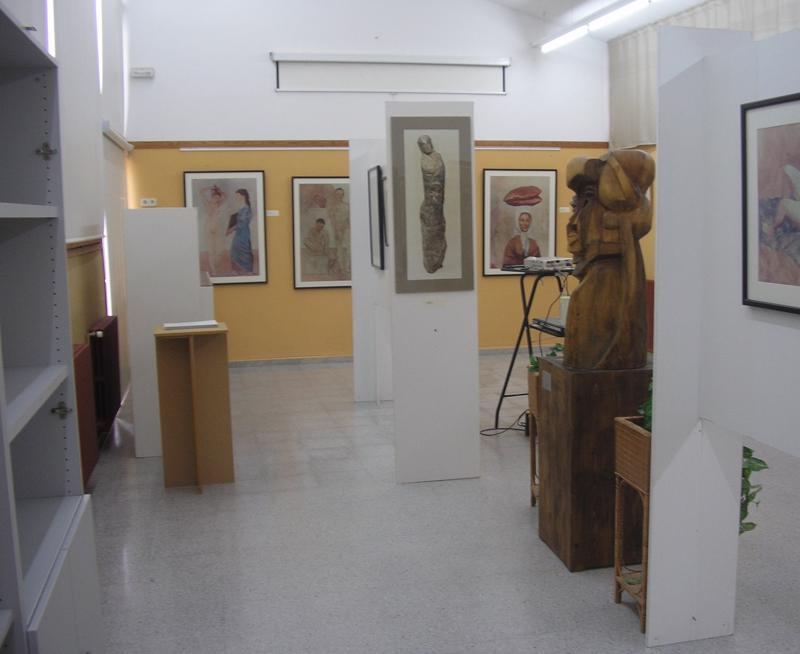
A museum housing a selection of his works, and memorabilia from his spell in Gósol, sits in the town hall square (the part of the village shown on the front-page picture of The New York Times).

Part of Gósol's Picasso Museum, inside (photo: from the Blogspot site Travelbox)

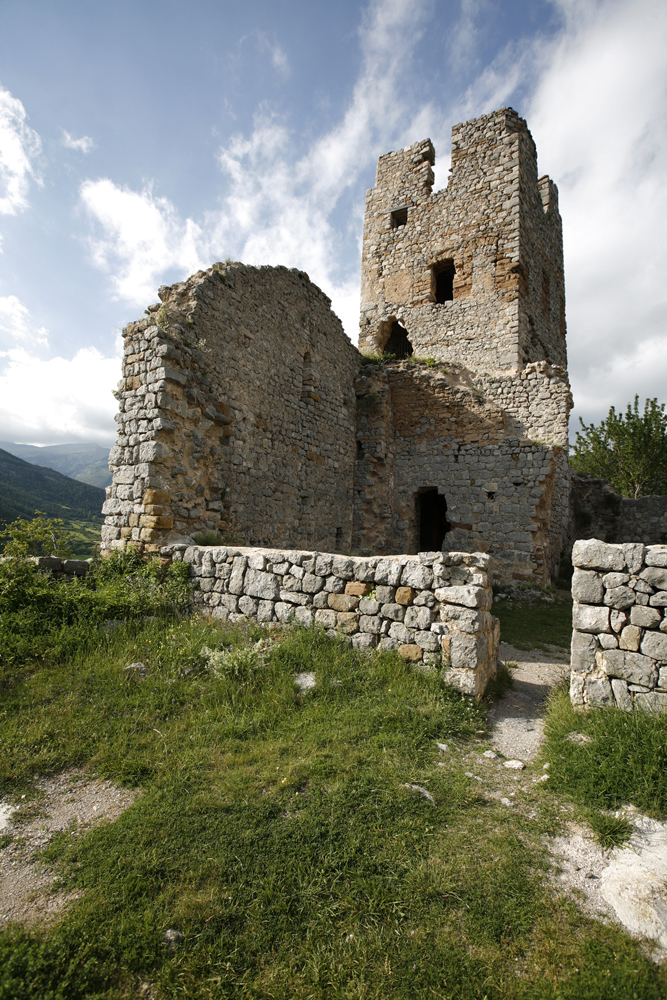
Gósol's 11th-century castle is another popular attraction, reached via the GR-107 footpath and atop a hill – in fact, like many of Spain's fortresses from the era, it used to actually be the town. 

Gósol's 11th-century castle (by PMR Maeyaert and Helen Blau/Wikimedia Commons)

Inside its walls, you'll find remains of where Gósol's people used to live in Mediaeval times, when the outer structure was the 'city' wall and the inner part was where its houses were built.

Very close by, you'll find mountain ranges and nature reserves – such as Cadí-Moixeró and the Comabona peak, and the frequently-snowcapped Pedraforca massif (around 2,500 metres above sea level) – and the nearby village of La Coma i la Pedra is wrapped in water meadows and dense woodlands, with the Port del Comte ski station a short drive away.

Once you've explored all this stunning landscape, the Forn de Gósol is one of the village's most-recommended restaurants: Cosy, family-run, with highly-traditional local and regional dishes and a dash of the modern and creative, you'll find it on the Carrer Canal.

Finding anything in Gósol is not difficult, because it's so small, but one thing you're certain to find there – or in any remote village in Spain's least-populated parts – is a new place to call home, one that you can return to again and again and will be remembered even if it's been years since your last visit.

Related Topics

  • Travel/Tourism
  • Society
  • Culture

You may also be interested in ...

More News & Information

What has Platja d'Aro done with its 'Stanley Kubrick' monolith?
Culture 06/04/2021
What has Platja d'Aro done with its 'Stanley Kubrick' monolith?

ALL OVER the world – at least, on both sides of the Atlantic – monoliths almost identical to those left by aliens invading earth in the cult Stanley Kubrick film 2001: Space Odyssey have been appearing, and...

View
Another 'alien' monolith appears in Spain – this time on Costa Brava beach
Culture 30/03/2021
Another 'alien' monolith appears in Spain – this time on Costa Brava beach

THOSE who thought the Stanley Kubrick-inspired 'monolith fever' spreading around the globe in December had cooled off altogether will be pleased, or annoyed, to know that it is still burning brightly: Another...

View
Torremolinos town council moves nativity scene into town centre shopping street
Travel/Tourism 24/12/2020
Torremolinos town council moves nativity scene into town centre shopping street

Torremolinos town councillors, Antonio Navarro and Lucía Cuín, officially opened the town's Christmas nativity scene today, which can be visited in the town centre until January 6th.

View

Advertisement

  1. Spain
  2. Catalonia
  3. Lleida province
  4. Gósol
  5. Catalunya's 'Covid haven' featured in The New York Times